Launching the new year
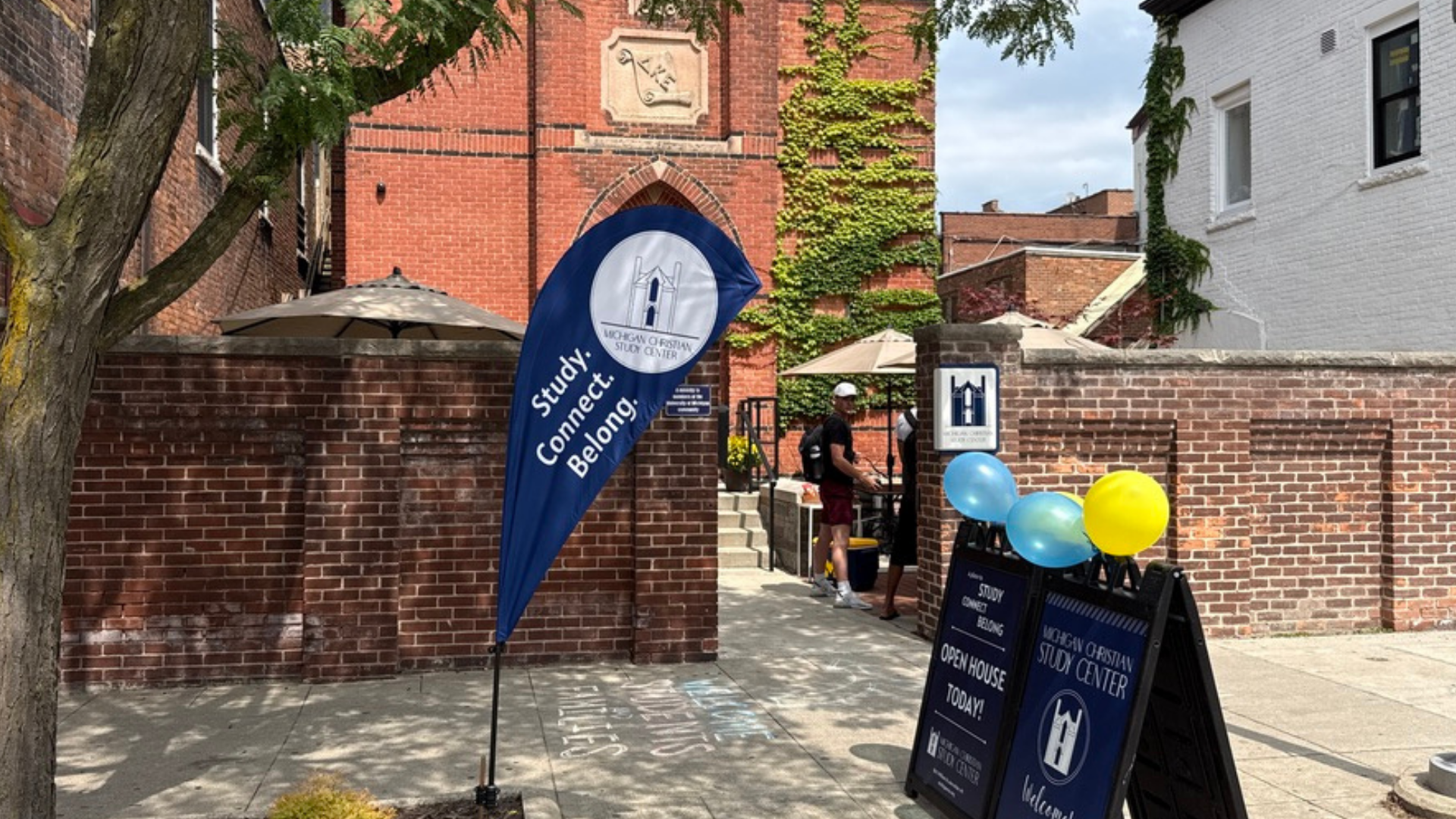
Greetings from Ann Arbor, where outside the Center’s peaceful patio, a wave of 10,000 incoming students and parents is crashing against a host of unfinished summer construction projects. Such is the cheerful chaos of a college town in late August.
We’re excited to launch our fifth year of faithful Christian presence at the University of Michigan. That begins with open houses this week to welcome new students to our community. One of the best parts of my job is not only introducing new students to the Center, but explaining to grateful parents the many ways that the Center supports their son’s or daughter’s spiritual and intellectual growth during their college years.
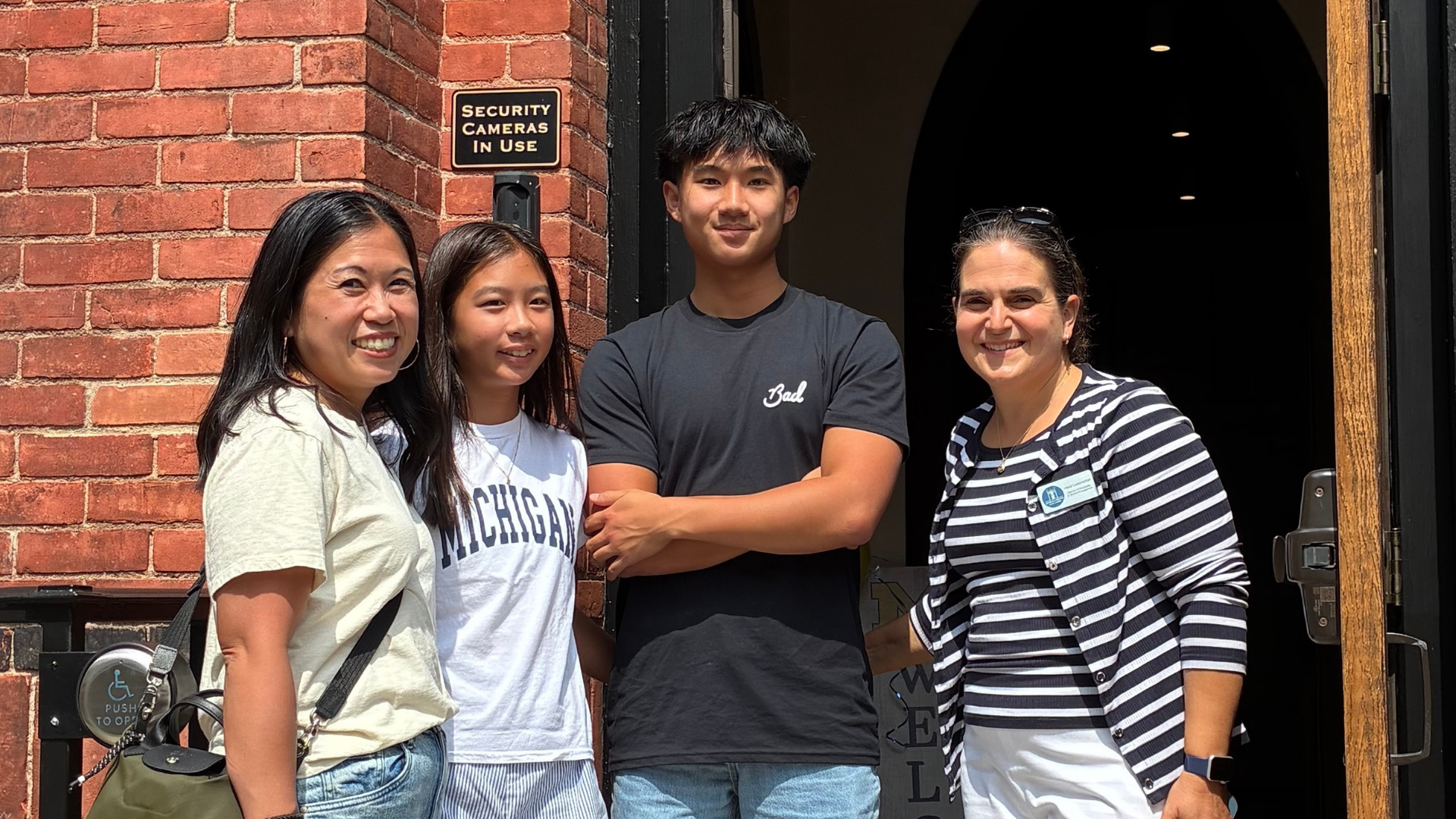
Welcoming new students and parents
Consistent with our commitment to cultivating Christian learning communities, the Center coordinated summer book discussions for students (Everything Sad is Untrue), faculty (Christianity and Intellectual Inquiry), and campus ministry leaders (What Grows in Weary Lands). Now that the campus is returning to life, we look forward to small-group meetings in the coming weeks to share our insights.

In preparation for the new year, Center staff members have been busy cleaning, painting, planting, and adding some new touches to our historic building. In addition, we’re taking additional steps to expand the Center’s footprint across campus.
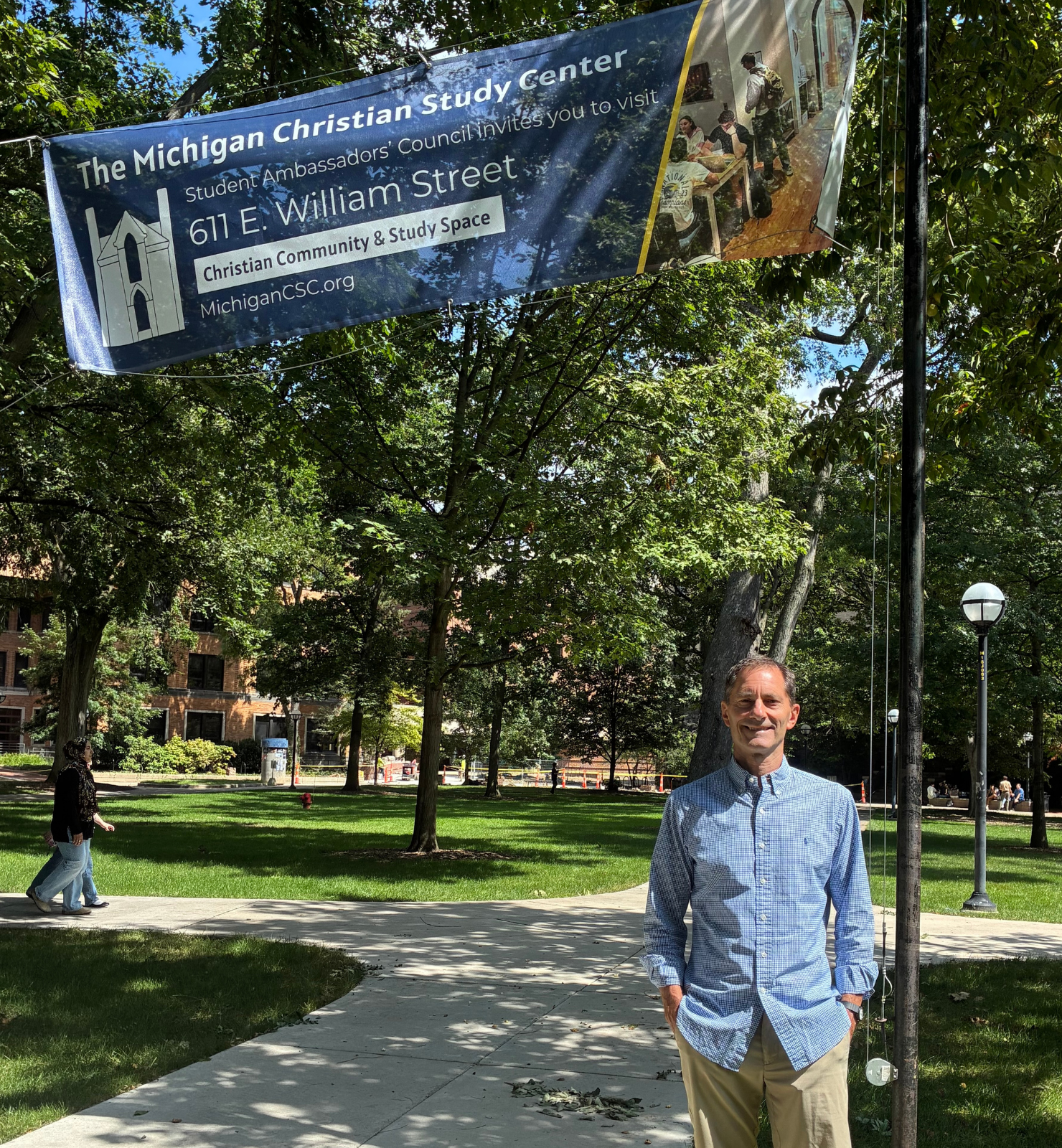
Spreading the word on the Diag
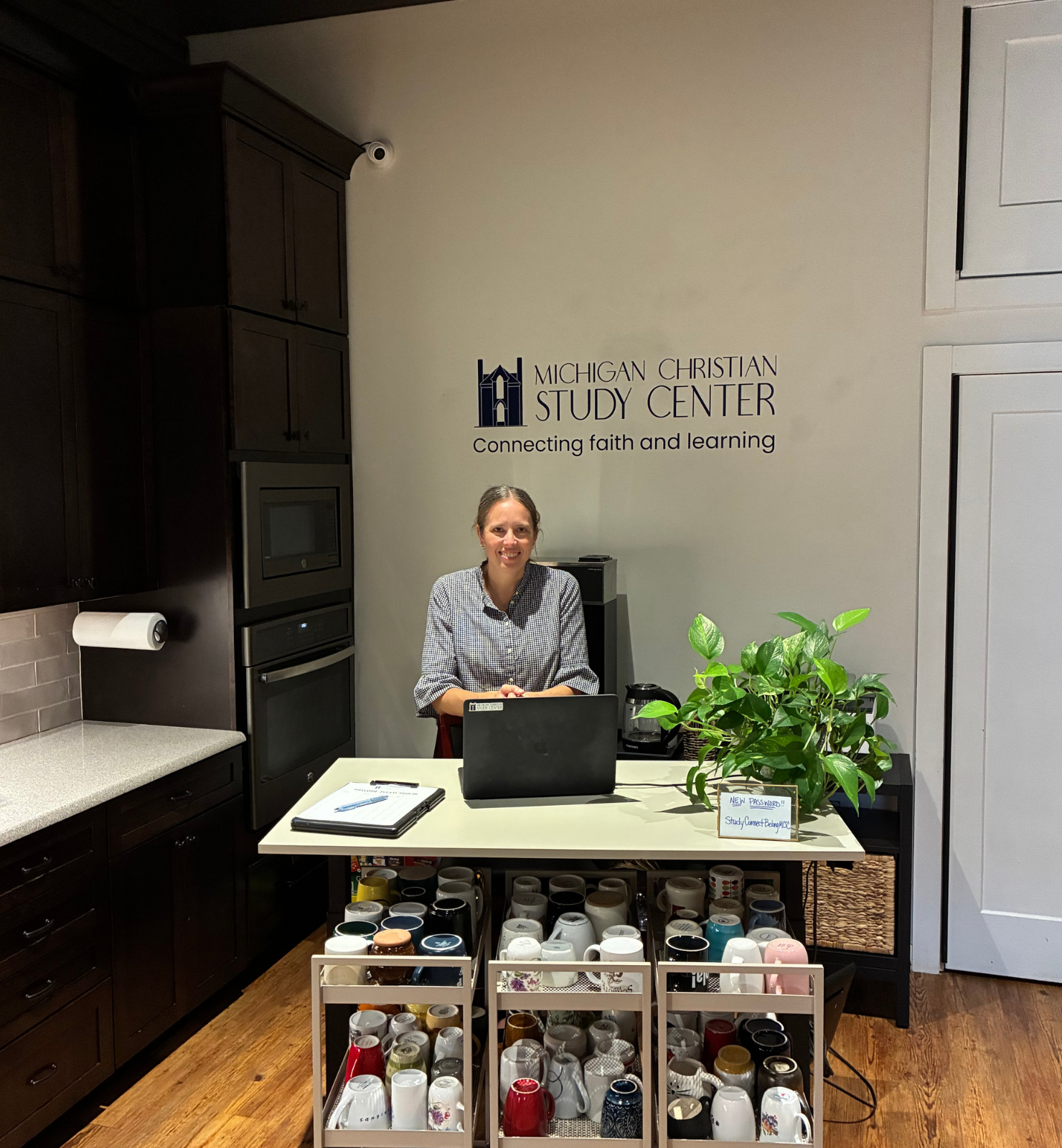
Our new wall mural
Next week, the Center resumes its array of programs and activities connecting Christian faith and academic life, including,
Weekly Friday lunches (and podcasts) featuring Christian professors with our 2026-27 theme, “The Connected Life.”
Module #1 of our Program in Christian Studies, “The Story of Scripture.”
Small groups led by Director of Spiritual Care Kristin Wong, “Life Lab: Exploring Spiritual Practices Together.”
Monthly public events beginning on September 18, when we welcome Christianity Today Magazine Editor-in-Chief (and Michigan alum) Marvin Olasky.
Monthly discussions among our growing community of U-M Christian professors.
Moreover, we’re excited to launch two new initiatives this fall that advance our mission:
To cultivate Christian thinking, we’re launching “Reasonable Belief: Developing a Confident Faith in an Age of Skepticism,” an eight-session workshop in Christian apologetics led by UM professor Dave Brzezinski.
To foster Christian unity, we’re launching the Public Reading of Scripture, a weekly practice of listening to the Bible being read in community.
Finally, as the expanding movement of Christian Study Centers at secular universities ramps up for another year, the question naturally arises, “What impact are we really having?” Fortunately, some encouraging news appears in a recent article by Perry Glanzer, professor of higher education at Baylor University, “How Students at Elite Secular and Christian Universities Understand the Good Life, Purpose, and Self-Worth: Some Surprising Differences”.
Dr. Glanzer surveyed students from Christian Study Centers at secular universities and students at Christian universities and discovered some notable results. For example, at the beginning of their time in college, students were asked what they considered to be the key ingredients in life’s purpose. Then these students were asked the same question twenty months later.
Over this time span, the percentage of Christian university students who included God in their life’s purpose remained stable around one-third. Meanwhile, the percentage of Christian Study Center students who included God as a key ingredient in their life’s purpose rose from about 40% to nearly 60%. He concludes, “These results indicate that Christian Study Centers were doing something right that Christian universities were not.”
Our purpose is not comparisons. I am, after all, the father of four Christian university graduates and I value their educational experiences. Rather, I think Perry is onto something regarding the uniquely formative nature of a Christian learning community embedded in an elite secular university. Over the past three years, I have been struck by the quality of students who make the intentional and countercultural decision to participate in the MCSC while also engaging fully in university life.
The Center is an oasis of a sort—providing rest, nourishment, and refreshment—but it’s not a cocoon. Students leave the Center better equipped and motivated to live out their faith in the classroom, the dormitory, and all across campus. Which is, after all, what real life as a Christian is meant to be—a natural rhythm of involvement in Christian community and active engagement in the world.
As the new academic year begins, we’re grateful for all of the students God will bring to our Christian learning community at the University of Michigan, and we’re grateful for your partnership in that process.