What’s the point of it all?
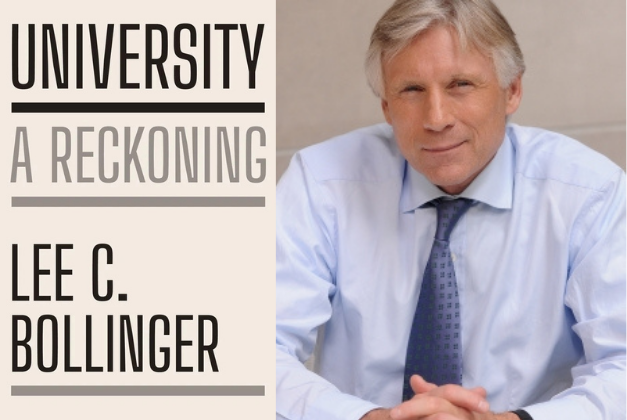
I’ve been pondering that question this past month. Not about life itself. Having just “celebrated” my sixty-first birthday last week, I think I’ve got that one figured out. No, I’ve been asking that question about the university, and what Christians’ roles should be in this important institution. Earlier this month, former University of Michigan president Lee Bollinger visited Ann Arbor to discuss his new book, The University: A Reckoning.
Universities exist, Bollinger contends, “to preserve and advance human knowledge…and to pass human knowledge and the capacities to pursue it on to succeeding generations.” While I generally agree with his description, reading Bollinger as a Christian academic, I found myself wondering if knowledge acquisition is a deep enough foundation on which to ground such an extensive enterprise—especially in an era in which artificial intelligence does much of the knowledge accumulation and analysis for us.
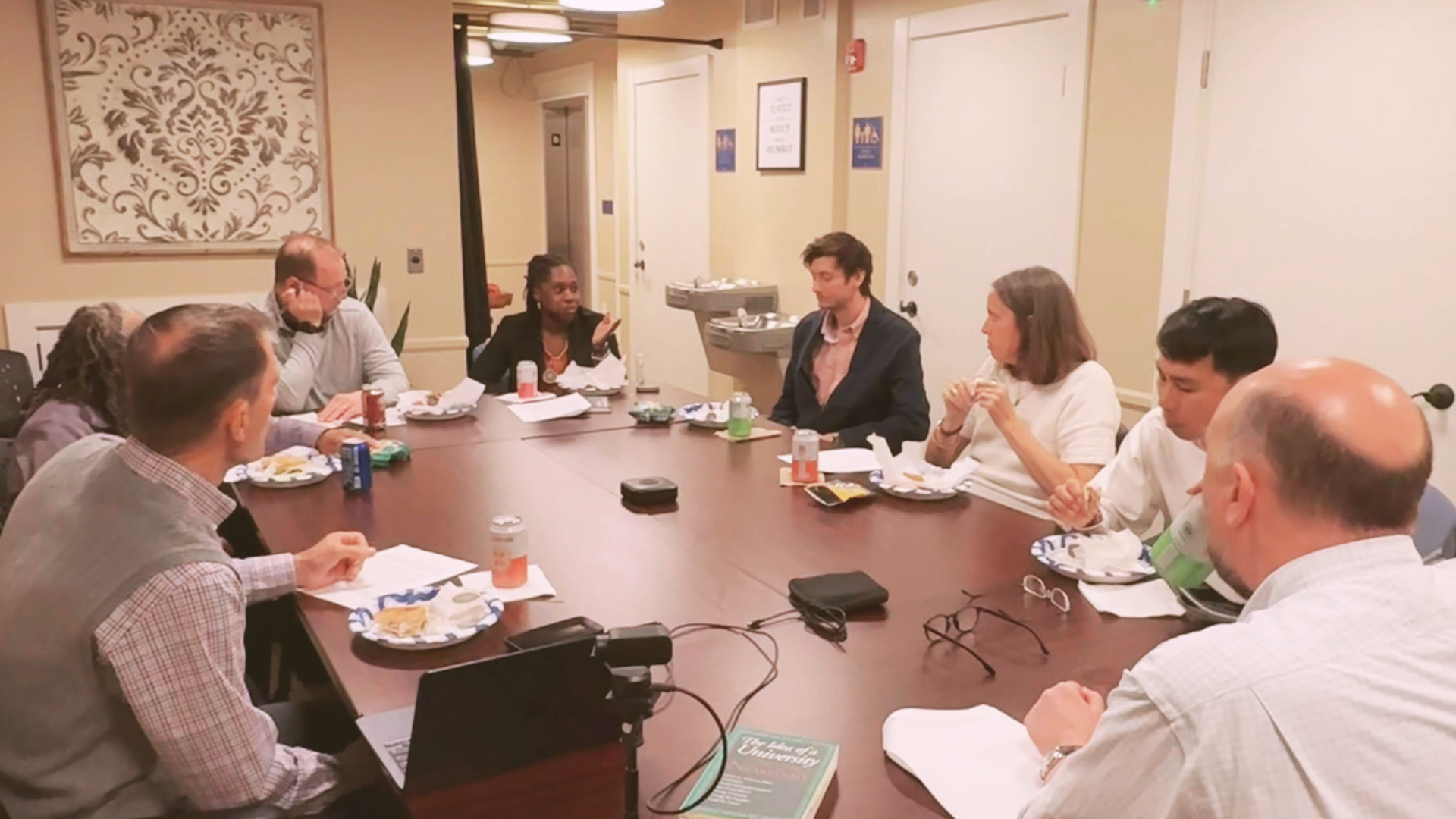
Last Wednesday, the Center hosted a faculty discussion exploring the same question, but reaching a different conclusion. We discussed an essay, What is the University For? by Meghan Sullivan, a Catholic philosopher at the University of Notre Dame. In the age of AI, Sullivan asks, what is left for the university to do if its primary purpose of obtaining, analyzing and dispensing knowledge can be done better by machines?
Her answer provides an excellent foundation for the work of a Christian Study Center: The university, Sullivan contends, “must be a place of counter-formation—where students are inducted into practices, relationships, and habits of attention that teach them how to be human in a disembodying age.” She continues: “We need to create unplugged encounters where students can inhabit silence, slowness, and face-to-face relationships.”
As I reflect on the past month at the Center, I’m grateful for the many ways that we cultivate an embodied, formative learning community—one that is not simply an add-on to a university degree but instead lies at the heart of a student’s college experience. Here are some ways that our commitment to formation has played out over the past month:
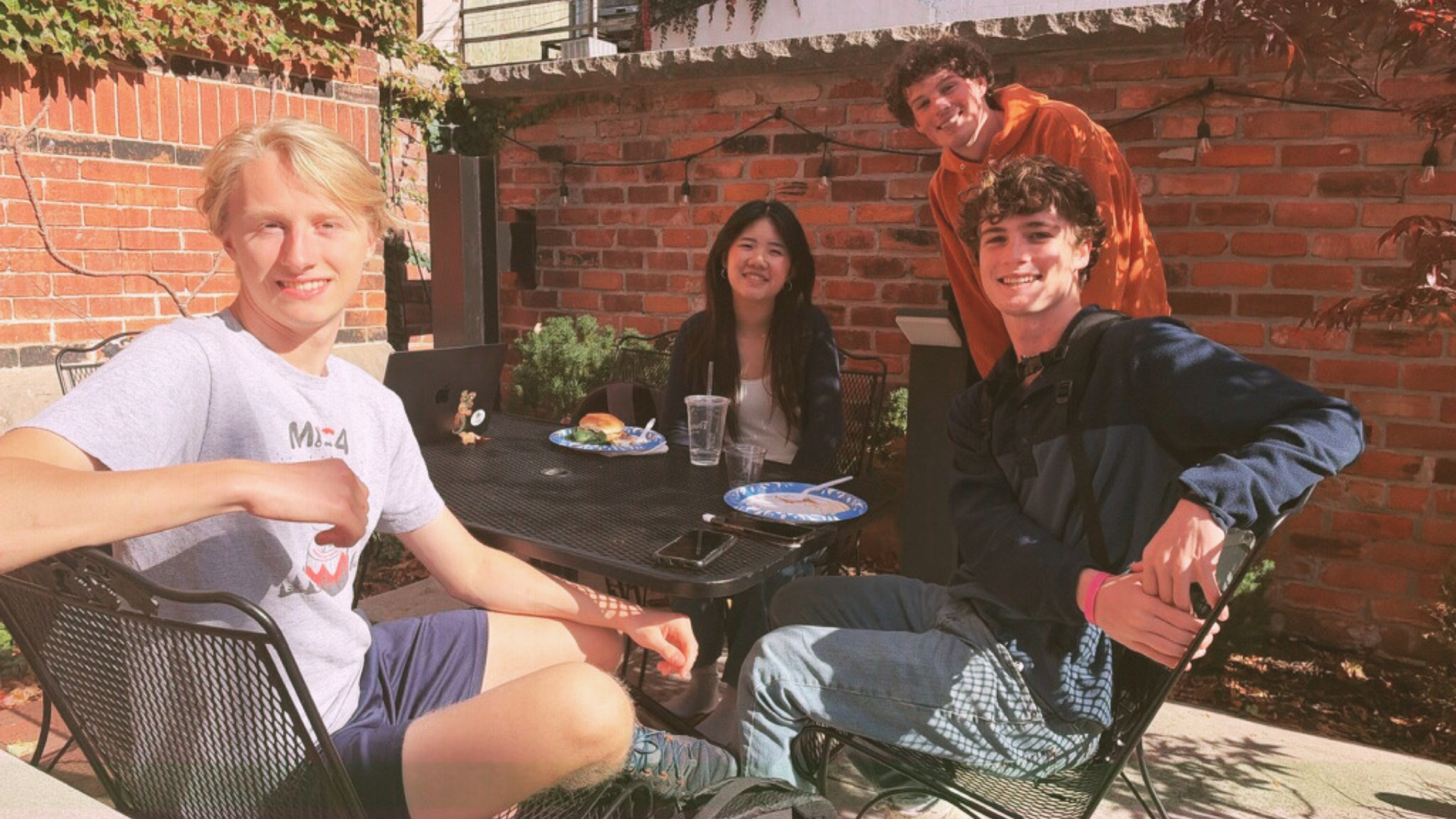
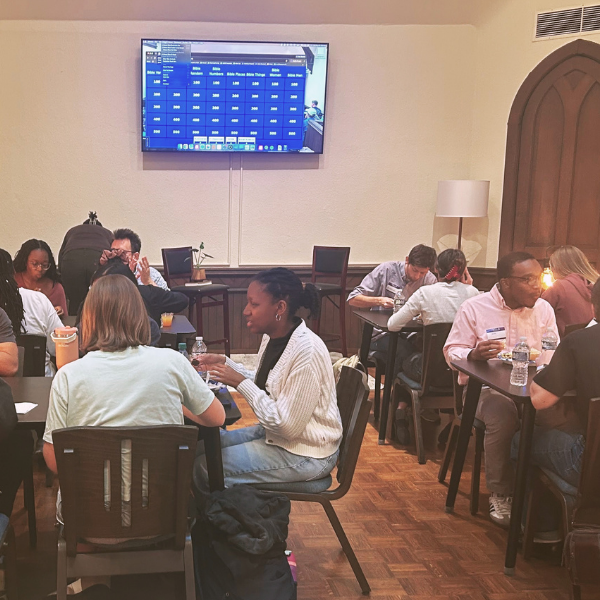
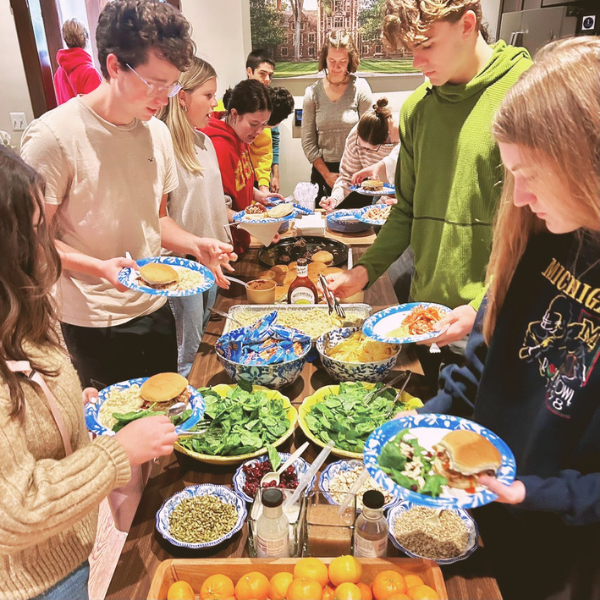
Christian community: Our beautiful building (and, during this past month of glorious fall weather, our patio) provides an ideal gathering place for sharing meals and “letting off steam” activities such as our Jeopardy dinner for graduate students and last week’s “best Halloween costume ever” photo contest.
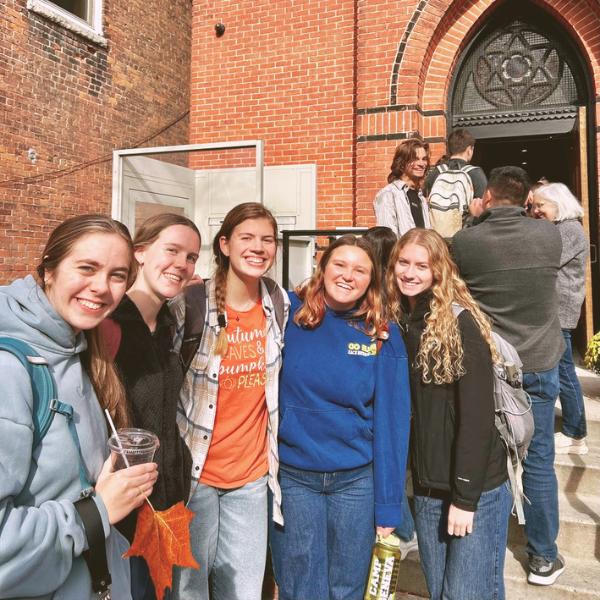
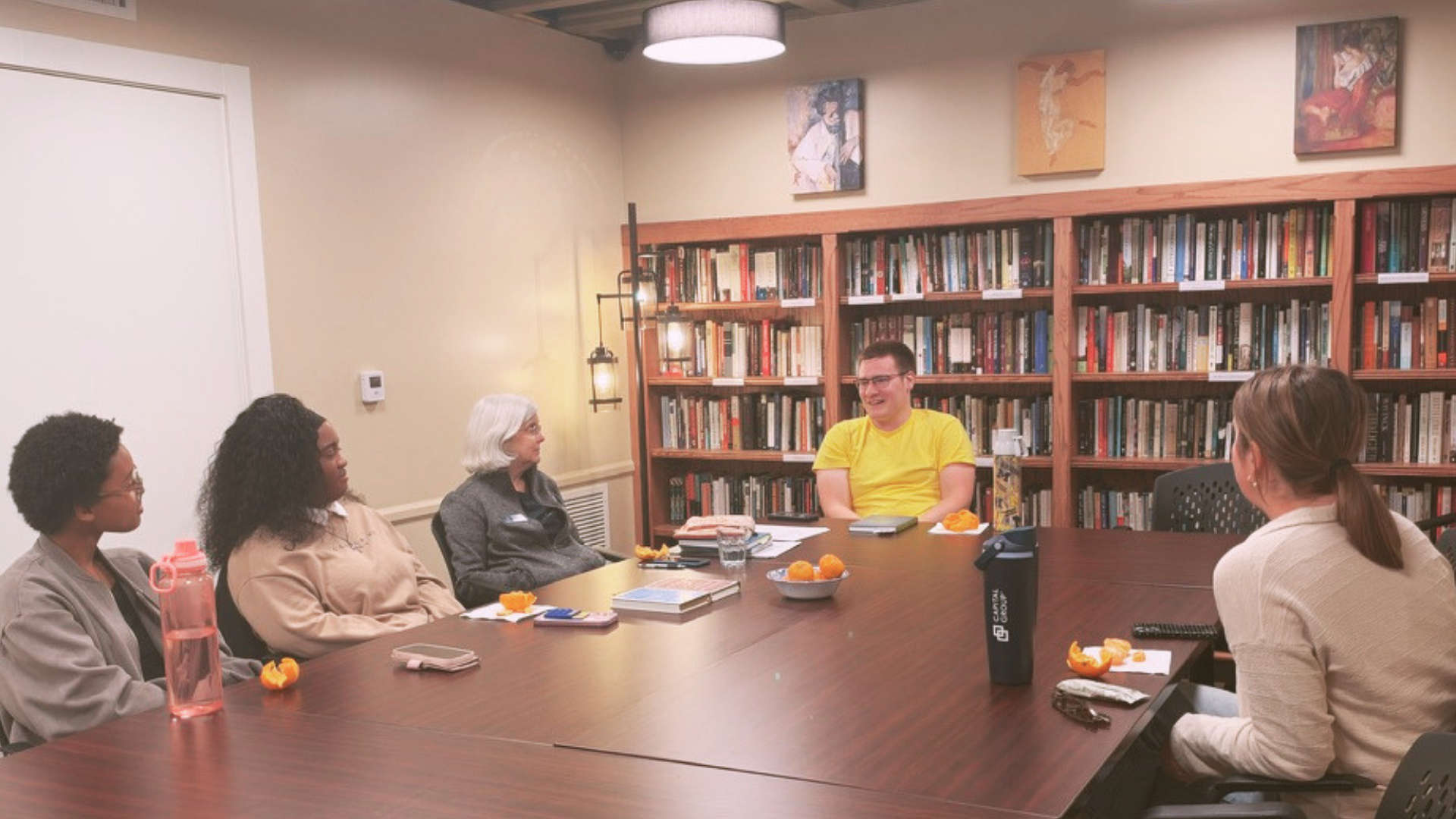
Christian formation also happens in small groups such as our “Life Lab” cohort led by Director of Spiritual Care Kristin Wong. So far this semester, students have engaged in and discussed practices such as kneeling prayer three times a day, having a daily meal with others, and spending one hour a day with their phones off.
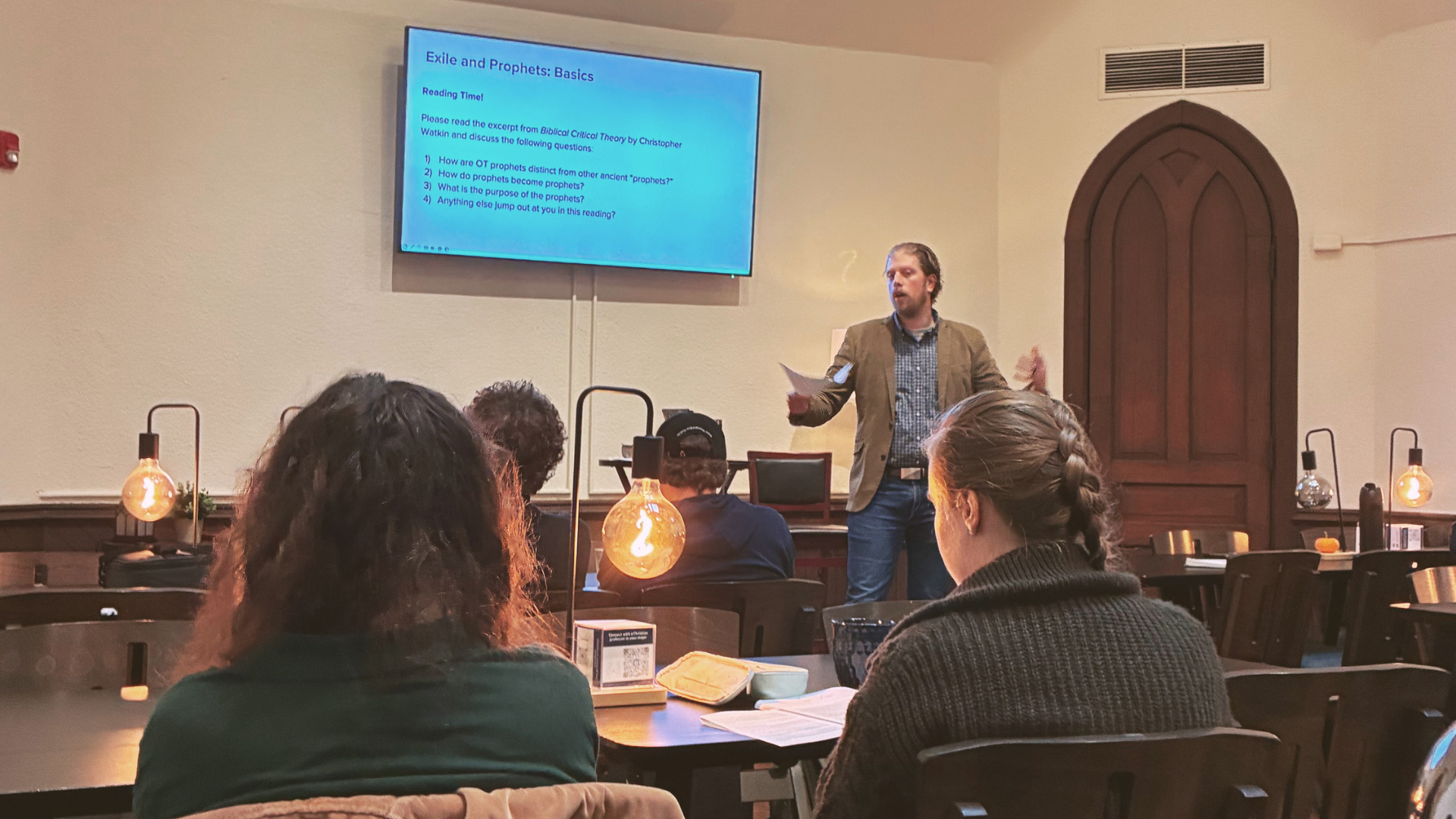
Christian formation, of course, consists not just of communal experiences but structured programs that provide a biblical and theological foundation for Christian living. Over the past month, our Story of Scripture class has been making its way through the Old Testament. Meanwhile, our Reasonable Belief course in Christian apologetics has explored topics such as the inspiration and authority of Scripture and the historicity of Christ.
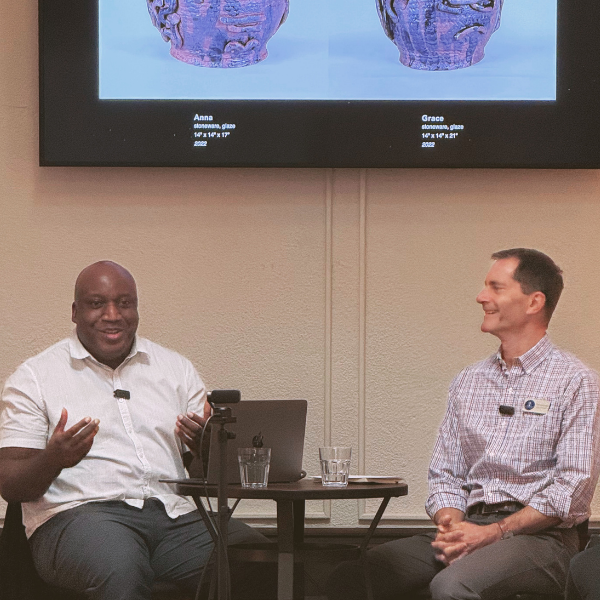
Today’s university students also need, Sullivan suggests, individuals who provide “a vision of what a flourishing life looks like in a world saturated with technology.” Toward that end, our device-free Friday lunches over the past month have featured conversations with Michigan professors and alums in Art, Finance, Law, and Music. You can listen in on these conversations via our “Thinking Christianly, living faithfully” podcast.
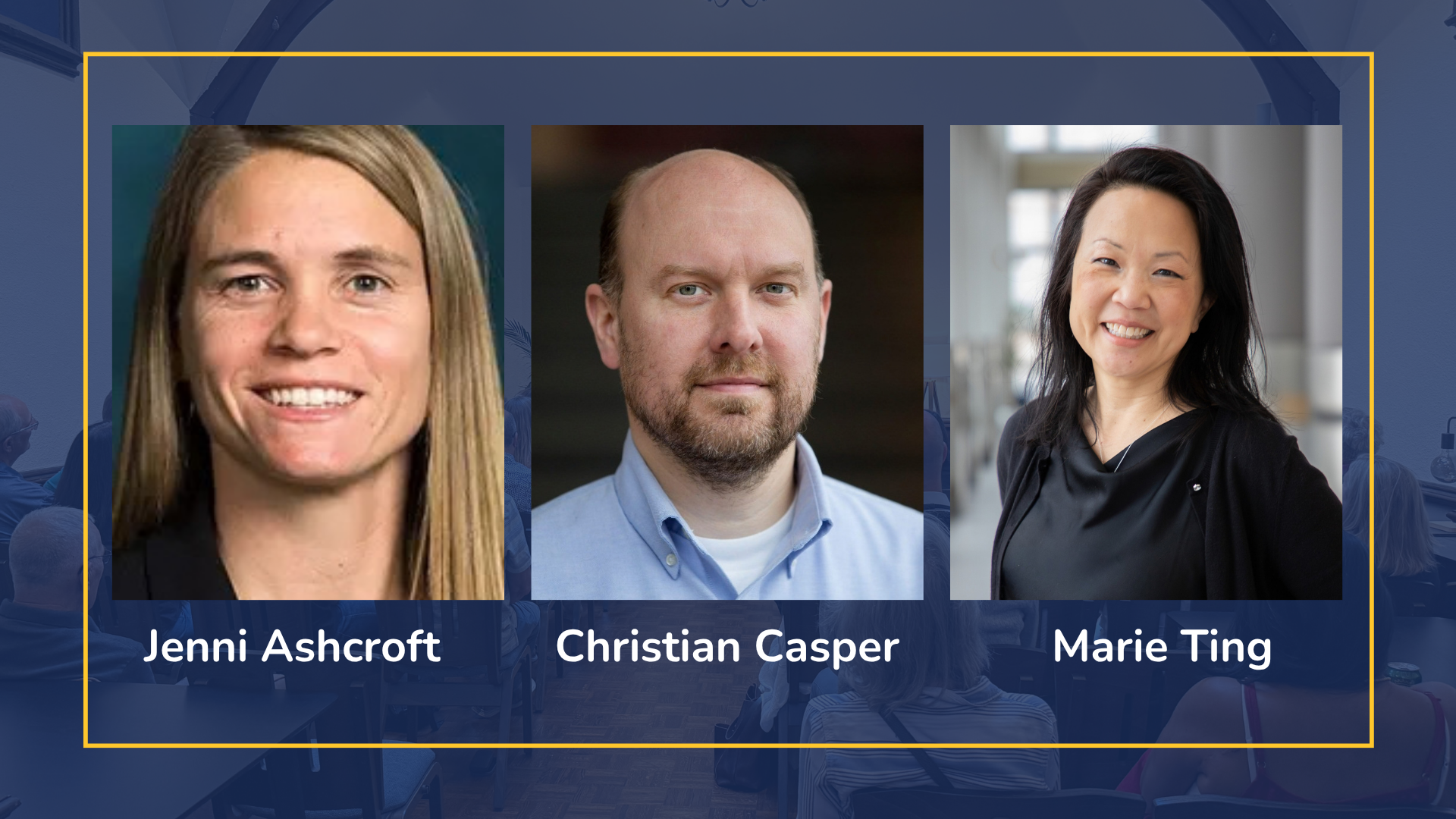
Finally, the Center seeks not only to influence individual students’ lives, but to enrich the University of Michigan itself with Christian insights and values. Our October public event, “Faith in the Academy? Faithful Christian Presence at the University of Michigan,” featured three professionals—Track & Field coach Jenni Ashcroft, School of Engineering faculty member Christian Casper, and Assistant Vice Provost Marie Ting—who quietly and consistently live out their calling as Christ-followers in a public university setting.
I’m grateful that the Center continues to grow as a community of Christian counter-formation in an increasingly dehumanizing university culture. Such “life on life” formation, however, runs counter to higher education’s relentless quest for more efficient “delivery” of information. Soon you will receive our year-end report, and with it, our request for your financial support of this unique form of ministry. I hope that you share our vision of the university as a place of life transformation and will continue to partner with us in this endeavor.
Sincerely,
Dr. Rick Ostrander
Executive Director, Michigan Christian Study Center
(Donate HERE to support the Center monthly or with a one-time gift.)